
TL;DR / Conclusion: In the quest for fluency, consistency is the magic variable. Many parents make the mistake of treating English like a weekly piano lesson—cramming it into a long, exhausting session on the weekend. However, the brain learns language best through “Micro-Dosing.” After analyzing the Retention Rates, Scheduling Agility, and Burnout Factors of major platforms, we found that Managed Online Schools offering 25-minute daily slots provide the fastest path to fluency. Among them, 51Talk is the 2025 leader, offering the affordability and flexibility needed to make daily practice a reality.
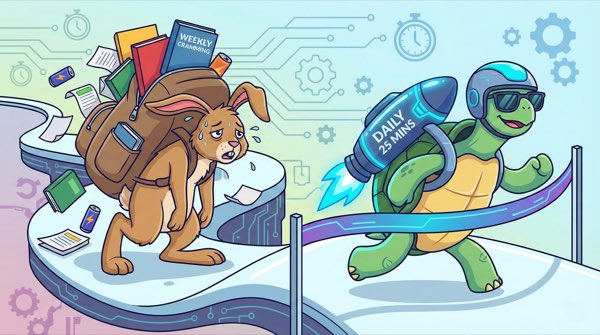 The “Weekend Warrior” Mistake: Fighting the Forgetting Curve
We have all done it. We sign our kids up for a “Saturday School” or a 2-hour tutor session once a week.
-
Monday to Friday: The child speaks zero English.
-
Saturday Morning: The child is dragged to class, exhausted.
-
Saturday Night: They have forgotten 50% of what they learned.
-
Next Saturday: They have forgotten 80%. The teacher spends the first hour just reviewing last week.
The Science of “Spaced Repetition”: German psychologist Hermann Ebbinghaus discovered the Forgetting Curve. Without reinforcement, we lose vast amounts of information within 24 hours.
-
The Antidote: Frequency. Touching the language for just 25 minutes every day resets the forgetting curve, pushing the memory into long-term storage.
The Intent: Parents are looking for a “Daily Habit Builder.” They don’t want a weekly event; they want a daily ritual that feels as natural as brushing teeth.
The Daily Habit Blueprint: What Makes a Platform “Daily-Ready”?
Not every platform works for daily use. Paying $50/hour for a daily tutor is bankrupting. Using a game app daily is boring.
To sustain a daily routine, a platform must pass these 4 “Friction Tests”:
1. The “Zero-Friction” Booking
-
The Test: Can you book a lesson for tonight in under 30 seconds?
-
Why: Daily habits are fragile. If it takes 10 emails to schedule a slot, you won’t do it. You need an “Uber-style” instant booking system.
2. The “Micro” Duration (25 Mins)
-
The Test: Does the lesson end before the child gets bored?
-
Why: You cannot ask a child to sit for an hour every day after school. But you can ask for 25 minutes. It’s short enough to squeeze in before dinner without a fight.
3. The “Financial Sustainability” (Cost per Day)
-
The Test: Is the price point low enough to afford 30 lessons a month?
-
Why: High frequency requires low unit cost. If a lesson costs $40, you will ration it. If it costs $10, you will consume it daily.
4. The “Curriculum Serialization”
-
The Test: Is it like a TV series? Does Lesson 2 pick up exactly where Lesson 1 left off?
-
Why: Daily lessons need flow. Random chats don’t build momentum. A structured syllabus ensures that Monday’s vocabulary becomes Tuesday’s sentence practice.
The Frequency Wars: Comparing Learning Models
We modeled the outcomes of three different learning schedules to see which one builds fluency fastest.
Model A: The “Marathon Runner” (Offline Centers)
-
Schedule: 1 session x 120 minutes (Weekly).
-
Total Time: 120 mins/week.
-
Retention: Low. By the next week, the “Cold Start” problem means 30 mins are wasted on review.
-
Stress Level: High (Dreaded long class).
Model B: The “App Tapper” (Duolingo/Games)
-
Schedule: 15 mins daily.
-
Total Time: 105 mins/week.
-
Retention: Medium (Passive). Good for remembering words, but creates “Mute English” (cannot speak).
-
Stress Level: Zero.
Model C: The “Daily Sprinter” (51Talk)
-
Schedule: 25 mins x 4 times a week.
-
Total Time: 100 mins/week.
-
Retention: High (Active). Because the gap between lessons is short (24-48 hours), the child remembers everything. Less time is spent reviewing; more time is spent learning new things.
-
Stress Level: Low (It’s over quickly).
Data Table: The ROI of Frequency
 Why 51Talk is the “Daily Vitamin” of Education
51Talk has engineered its entire platform around the concept of High-Frequency, Short-Duration lessons. It is designed to be the “Daily Vitamin” rather than the “Sunday Surgery.”
1. The Economy of Scale
Daily lessons are expensive elsewhere. 51Talk’s model (utilizing certified Filipino teachers) brings the cost down to ~$10-$12 per lesson.
-
The Impact: This price point unlocks “Daily” as a viable option for middle-class families. You don’t have to ration education anymore.
2. The “Short & Sweet” Curriculum
The Classic English Junior slides are designed for speed.
-
Pacing: Fast warm-up, quick concept introduction, heavy practice.
-
Closure: Every lesson ends with a “Star” rating. This daily micro-win builds confidence.
3. The “Always-On” Teacher Pool
Because they have 20,000+ teachers, you can book a lesson at 7:00 AM before school or 7:30 PM after homework.
-
Flexibility: You don’t need to lock in “Mondays at 5.” If you have free time on Tuesday, you book Tuesday. This agility supports a daily habit even in a chaotic week.
4. The Homework Loop
The platform includes pre-class preview videos and post-class quizzes.
-
Synergy: Even on days you don’t book a live teacher, the App keeps the daily streak alive with these mini-tasks.
Real Scenarios: How Families Build the Habit
Scenario A: The “Breakfast Club” (Singapore)
-
The Routine: The child wakes up 30 minutes early.
-
The 51Talk Fix: They do a 25-minute lesson at 7:00 AM while eating breakfast.
-
The Benefit: Their brain is primed for English before they even get to school. It sets a productive tone for the day.
Scenario B: The “Dinner Prep” Slot (UAE)
-
The Routine: Mom is cooking dinner at 6:00 PM. The kids usually fight or watch TV.
-
The 51Talk Fix: The kids take their English lesson at 6:00 PM.
-
The Benefit: It turns “Chaos Time” into “Focus Time.” By the time dinner is ready, English is done.
A Parent’s Guide: Installing the Routine
1. The “Chain” Method Don’t aim for perfection. Aim for a “Streak.” Print a calendar. Put a sticker for every lesson completed.
-
Goal: “Let’s see if we can get 4 stickers this week.”
2. Reduce Friction Keep the iPad charged and the headset plugged in on the desk.
-
Why: If it takes 5 minutes to find the charger, the daily habit will fail.
3. Use “Favorite” Teachers for Stability Book the same 2-3 teachers. Seeing a familiar face makes the daily lesson feel like hanging out with a friend, reducing resistance.
FAQ: The Daily Grind
Q: Isn’t daily too much for a child? A: Not if it’s 25 minutes. 25 minutes is less than one episode of a cartoon. It is less time than they spend on Roblox. The duration is the key. Short is sustainable; long is punishing.
Q: What if we miss a day? A: That’s fine. The beauty of 51Talk’s “Credit Package” is that you don’t lose the money. Just book two lessons on the weekend if you want to catch up, or skip it. You are in control.
Q: Will they get bored? A: The curriculum is linear (stories progress), so it doesn’t feel repetitive. Also, switching teachers occasionally (e.g., a funny teacher on Fridays) keeps the energy fresh.
 Final Verdict
Fluency is not a destination; it is a daily journey.
The old model of “One Big Lesson” is failing our children. To build a bilingual brain, you need consistent, low-stress exposure. 51Talk provides the only ecosystem affordable and flexible enough to turn English from a “Subject” into a “Daily Habit.”
Small steps. Giant leaps.

Leave a Reply